
2 products
Pros and cons of hands-free dog leashes
Hands-free running: Feels easier because your arms are free and you can keep your pace.
Harder jolts: Without a bungee section sudden pulls or stopping can impact your body more.
Focussed hiking: You can focus on the trail, give your dog room to explore, and it’s safer on uneven ground since your hands are free for balance.
Balance risk: Sudden lunges and strong dogs could throw you off balance if not prepared.
Always attached: It’s more secure than hand-held because if the leash slips your dog is still attached to you.
Shared impacts: Being tethered to your dog can impact you in unexpected ways because what happens to your dog happens to you too.
Core control: Strong pullers can feel more manageable because the force is controlled at your core instead of your arm.
Hip rubbing: Thin, unpadded leashes can dig into your hips and rub.
Less strain: It can spare your shoulder and hands because you’re not absorbing pulls through one arm all walk.
Back strain: Wearing in the wrong position or extended periods with a pulling dog can cause hip and back pain.
Carry more: You can hold your coffee, phone, bag, water bottle, etc instead of your leash.
Leash tangles: Sniffing and zig-zag walking can tangle you because your dog will cross sides and you may need to spin to fix it.
Faster rewards: It’s easier to use treats because your hands are free to reward quickly.
Harder with two: Can be harder to untangle than a classic leash if one dog stops or goes in a different direction.
Better training: It can help with loose leash training techniques like “be a tree” or quick turns because you can easily stop and pivot and focus on your dog's reaction.
Limited sizing: Hands-free leashes have limited waist range that may not fit your body.
Versatility: Hands-free leashes often have adjustable lengths and clip to poles more easily.
Reduced range: After wrapping around your waist, the length of a hands-free leash is usually shorter than a classic leash.
Less mental load: Walks feel easy because you stop thinking about the leash.
Learning curve: You and your dog may need time to learn because the leash feels different and they may need to stick to one side.
Why choose Coda hands-free dog leashes
All-in-one leash system
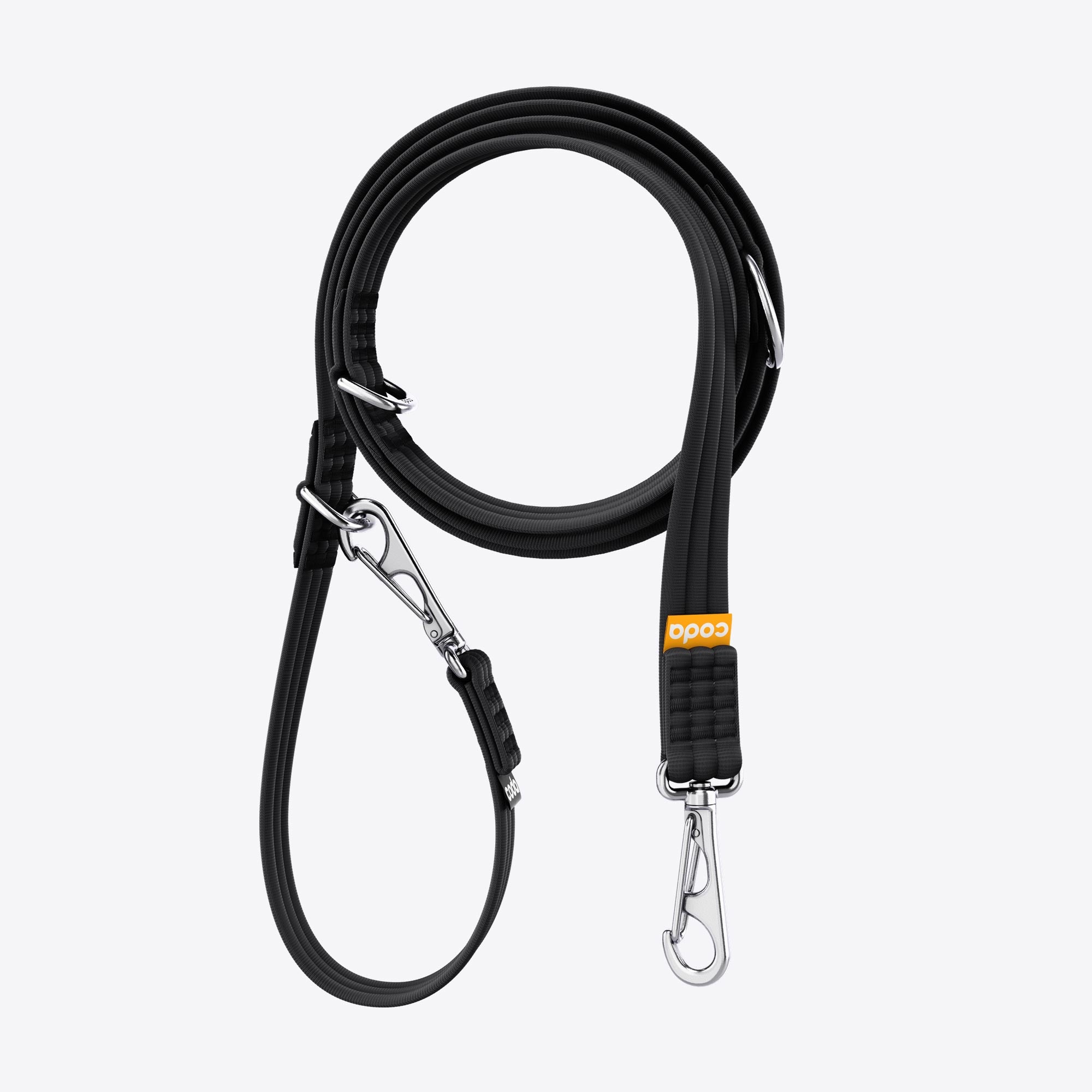
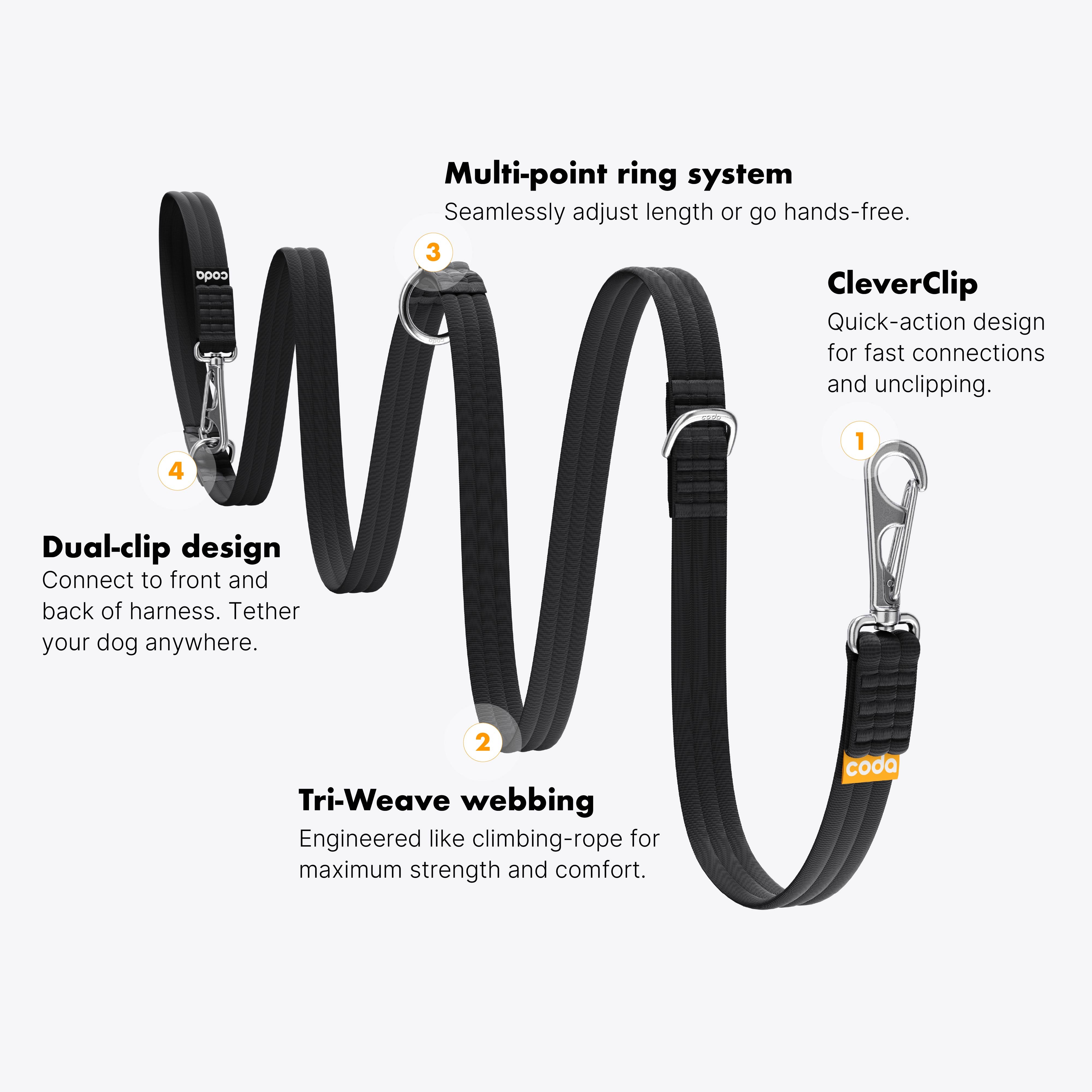
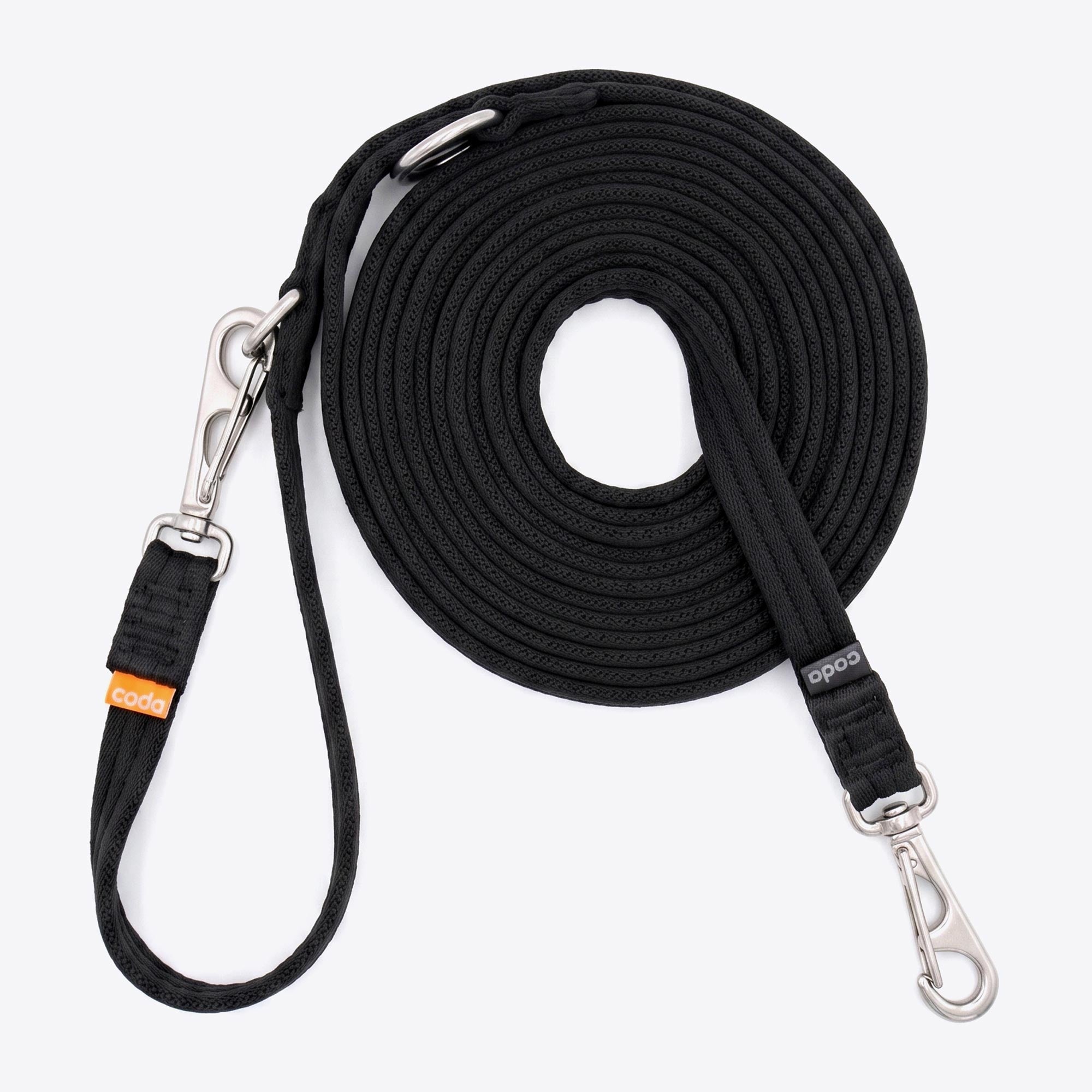
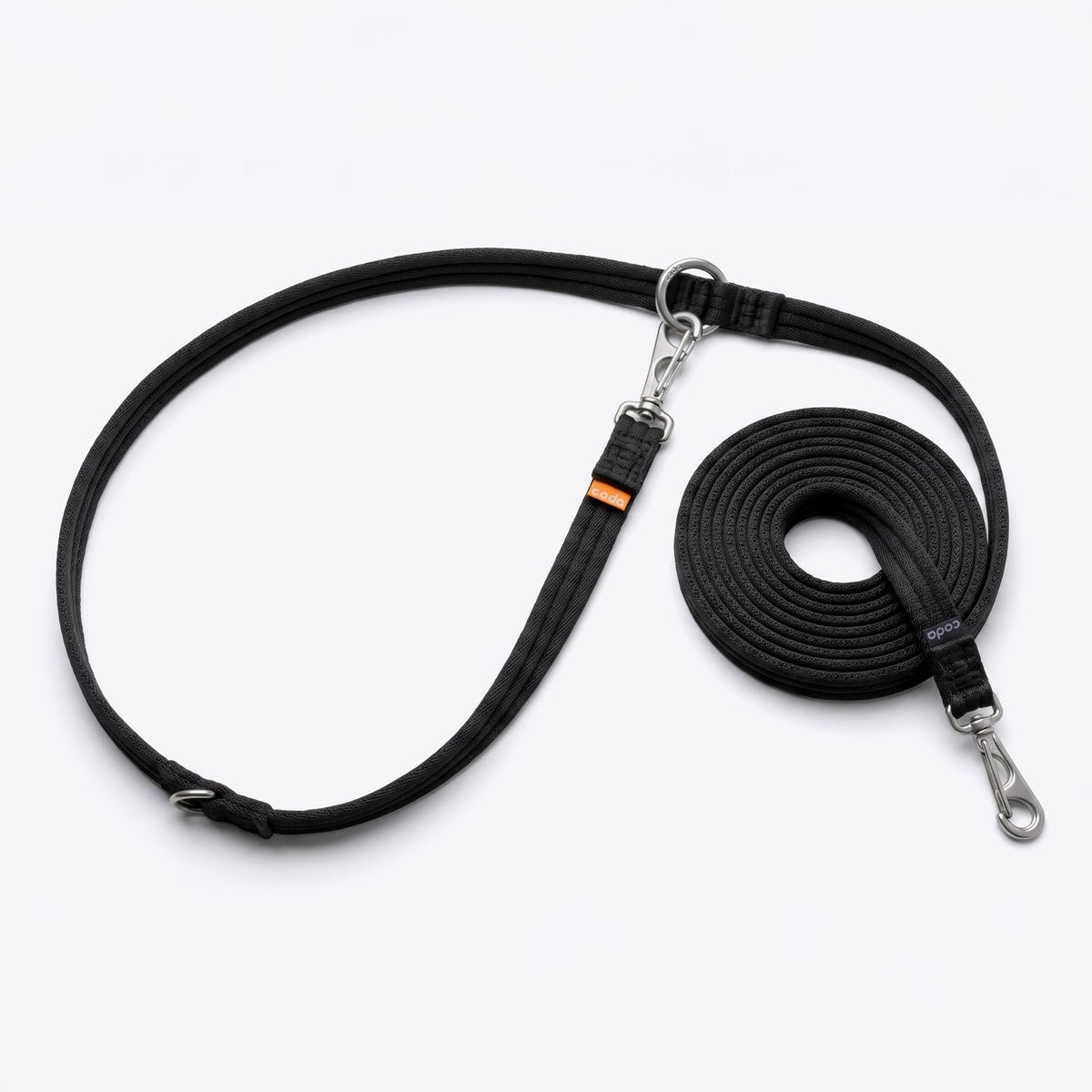
More than just hands-free, Coda's CleverClips and multi-point ring system enables two-point harness attachment, adjustable lengths, and easy tethering.
Made for strong dogs
Engineered with a 1-tonne (approx. 2,200 lbs) load rating using Tri-Weave webbing, triple-reinforced bartack stitching and CleverClip hardware for maximum break strength.
Hardware made to last
Features marine-grade stainless steel clips and precision-cast seamless rings to prevent corrosion and mechanical failure.
Ultra comfortable
Tri-Weave webbing incorporates three internal padded cores, providing integrated cushioning and grip comfort throughout the entire length of the leash.
Better clip design
All Coda leashes use the proprietary sand-proof CleverClip with quick-action mechanism for easy and secure connection and 360-degree swivel that prevents twisting.
Precision sizing
Available in Regular (25 mm | 1 inch) for medium to large breeds and Slim (19 mm | 3/4 inch) for smaller dogs to optimise hardware weight.
10-Year Warranty
Coda's double ended dog leashes are backed by a 10-Year Warranty, so you can walk worry-free — no matter how far you go or where you roam.
Warranty InformationHands-Free Leash Guides

How To Start Running With Your Dog In 2026: Train Your Dog To Love Running
Dreaming of the perfect running partner? Our guide features breed-specific rules, vet-approved tips, and the 2026 gear guide for you and your canine athlete.
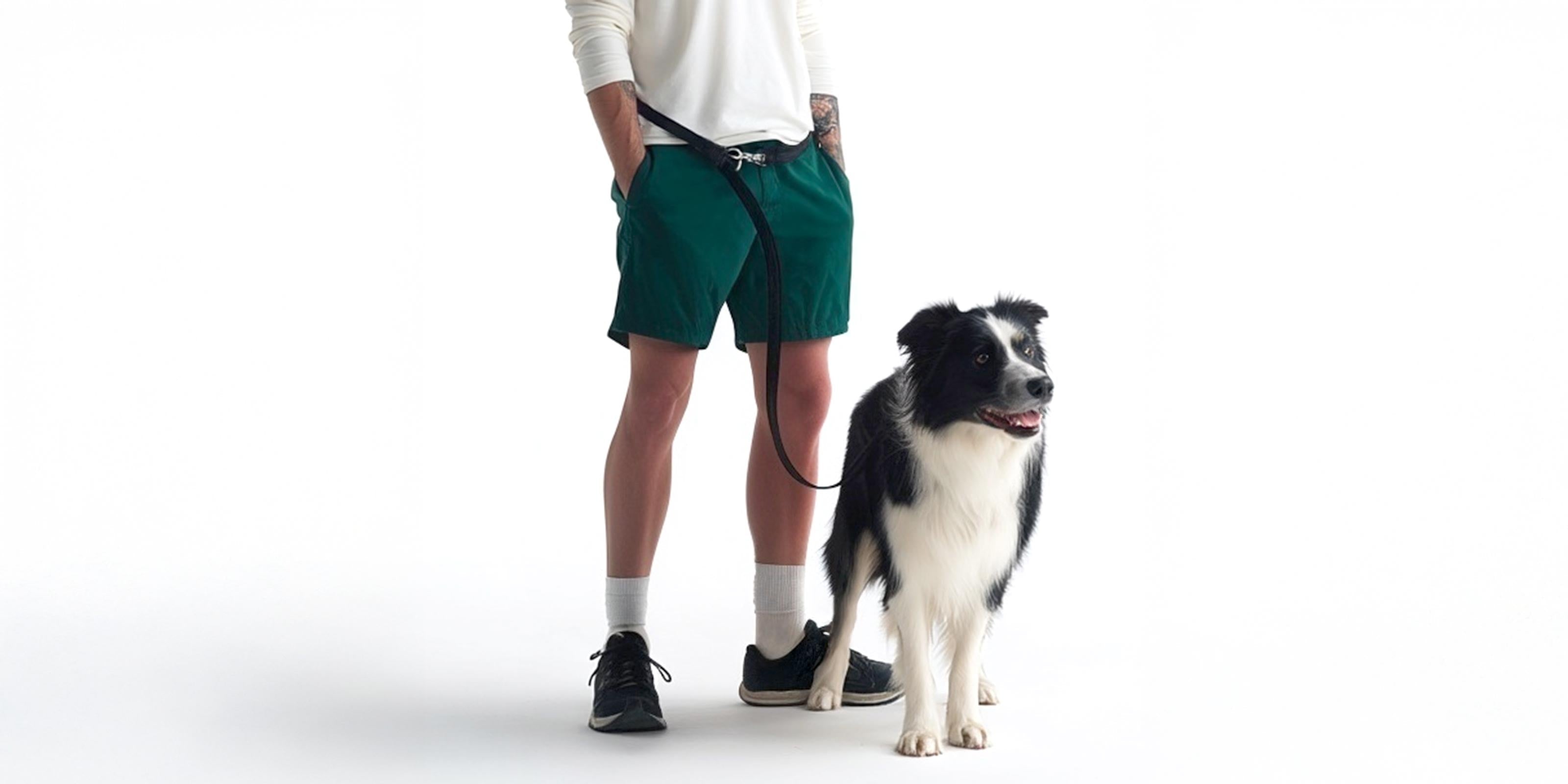
2026 Gear Guide For Running With Your Dog
Your complete guide to the best leashes, harnesses, running belts, paw protection, hydration, and visibility gear for running with your dog in 2026.
Hands-Free Leash FAQs
Are hands-free leashes good for dogs that pull?
A hands-free leash can make a pulling dog easier to manage by anchoring the force to your core for greater stability, though it only changes where the pulling force goes rather than stopping the be...
Are hands-free leashes good for running with dogs?
Hands-free leashes optimise running form and stability by managing your dog's momentum from your centre of gravity, though they are best for loose-leash trained dogs navigating non-technical terrain.
Are hands-free leashes better than classic leashes?
Choosing between a hands-free and a classic leash comes down to lifestyle. You need to balance the freedom, training convenience, and added stability against the simplicity and easier navigation of...
Are hands-free dog leashes safe?
Hands-free leashes are often safer than hand-held options because anchoring the line to your centre of gravity improves your balance and eliminates the risk of a dropped lead.