
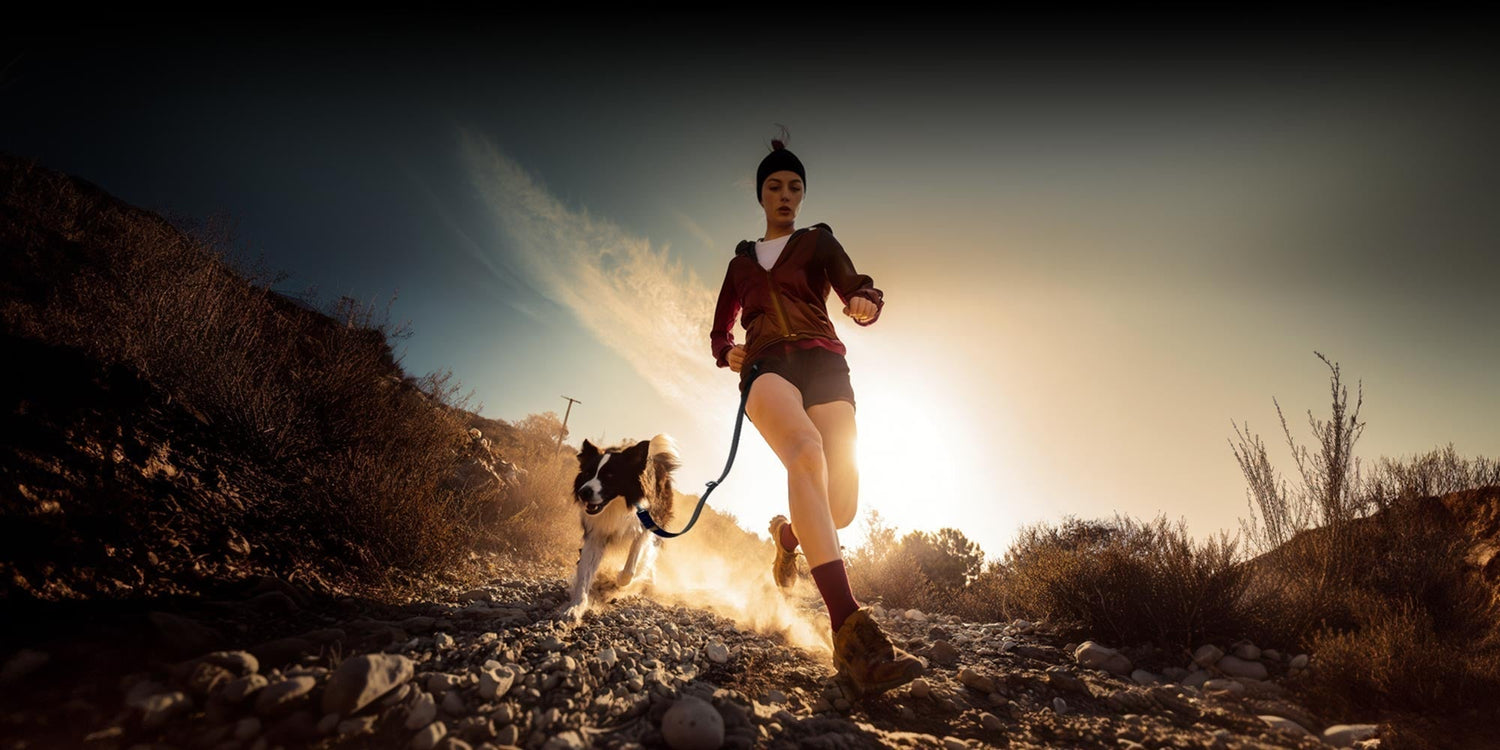
Before you start running with your dog, a vet check-up is non-negotiable because dogs cannot communicate internal issues like heart palpitations or early joint pain.
This is especially critical for those starting from scratch and senior dogs.
1. Train your dog to run with you
Training your dog to run by your side requires them to focus on the task, while matching your gait.
Many runners prefer this position because it allows them to maintain a natural rhythm and prevents them from tripping over their dog.
Master loose leash walking first
It is a mistake to assume that a dog that pulls while walking will perform better while running.
You must establish loose-leash walking skills, even if they are slightly ahead or behind you.
If your dog is a puller, the best place to start is our Data-Driven Guide to Stop Your Dog Pulling on the Leash.
Transition to Running
Once loose leash walking is established, use these three techniques to transition to running:
- Short Strides: Start by adding five steps of running into a walk, then stopping suddenly. This encourages your dog to look to you to set the pace rather than charging ahead. Gradually increase to 30 seconds of jogging every minute.
- Pacing Games: Vary your speed between a slow walk and a fast jog and treat your dog when they match your pace.
- Directionals: Teach commands such as "left," "right," "stop," and "slow down" by saying the word every time you perform the action during runs. If you want to differentiate from standard life commands, use sled-dog terms like "gee" (right) and "haw" (left), which has the added benefit of making you feel like a Nordic musher.
Use Gear to Differentiate Running from Walking
Dogs use equipment cues to know what behaviour is expected of them.
To prevent your dog from confusing a disciplined walk with a high-energy run, use different gear for each activity.
- Harness: If you want your dog to pull on runs (canicross), use a specialised pulling harness for running. This should be distinct from their everyday walking gear. Their everyday harness should signal that loose-leash walking is required.
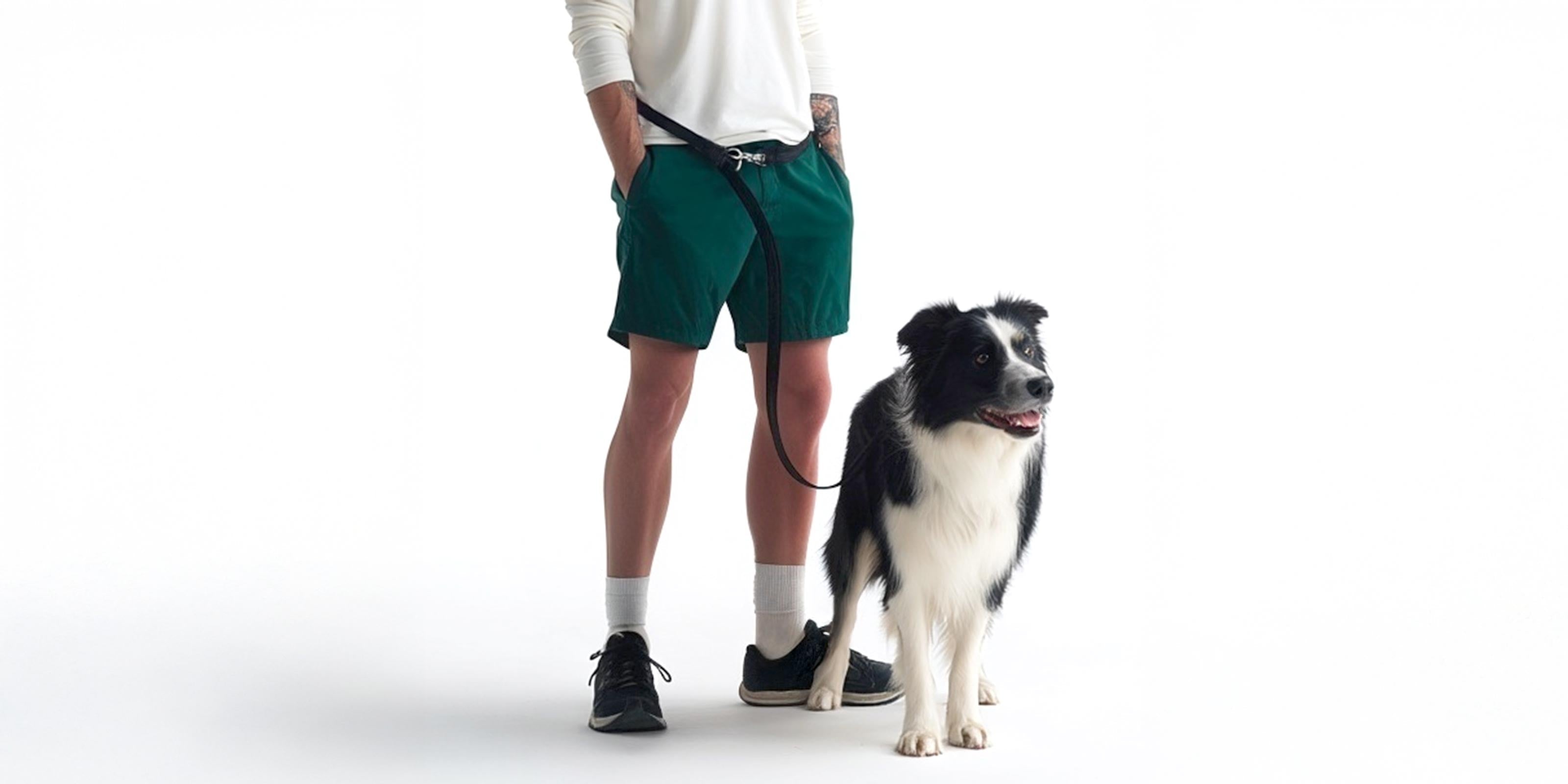
- Leash: Changing your leash also serves as a contextual cue. For example, use a classic leash for walks and switch to a hands-free waist leash for running. This also helps your dog recognise which activity is about to begin.
2. Warm-up rituals
Start every session with a 10-minute walk to give your dog time to satisfy their curiosity and toileting. This will reduce the likelihood of interruptions during the run.
3. Gradual conditioning
When starting, build conditioning through small sessions rather than one long weekly run. One mile three times a week is better than 3 miles once a week.
Inconsistent loading accounts for 90% of the sports injuries seen by some veterinarians.
Use these tactics to gradually increase you and your dog's conditioning:
- Add brief 30-second jogs into your regular walk
- The 10% Rule: Never increase your total weekly distance by more than 10% from the previous week
- Pooch to 5K: The most recommended program for beginners. You can simply pause if your dog reaches their distance limit
4. Choose the right equipment
Choosing the right gear for running with your dog depends on their breed and size, and whether you want them to pull, or run beside you.
Check out our 2026 Gear Guide For Running With Your Dog for the best leashes, harnesses, running belts, paw protection, hydration, and visibility gear on the market.
Shop Running Dog Leashes from Coda.
FAQs
How far can I run with my dog?
Any healthy dog can build mileage, but their breed provides the blueprint for their natural distance.
Endurance and working breeds
Certain breeds have metabolic advantages that make them excel at longer distances:
- Alaskan Huskies: Possess a mutation that allows them to process fuel more efficiently than other animals over extreme distances
- Border Collies and Australian Shepherds: Capable of covering marathon distances or more without apparent fatigue
- German Shorthaired Pointers: Bred for all-day hunting
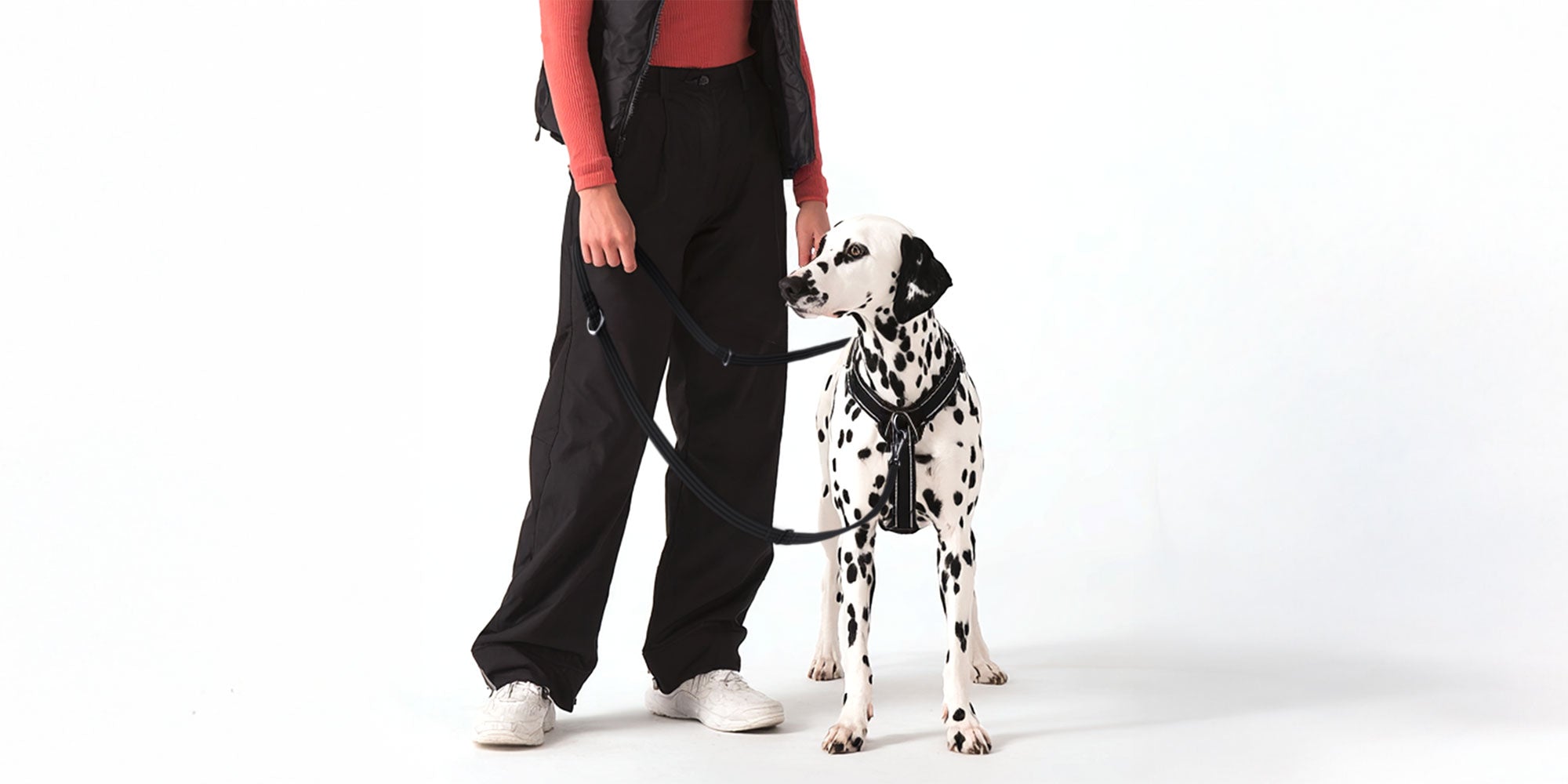
- Dalmatians: Bred to trot alongside carriages for miles
Smaller breeds
Small dogs are surprisingly capable distance runners.
Shih Tzus, Jack Russells, Border Terriers, and Chihuahuas have successfully completed half-marathons.
Follow the 3-to-1 rule. Every mile you run costs three miles of effort for your small dog. Their stride length is 3-6 times shorter than yours, requiring more steps to cover the same distance. However, their efficient metabolism and four legs bridges some of the gap.
Sprinters and extra large breeds
Some breeds and personalities may not be suited to running longer distances:
- Greyhounds: Natural sprinters that will become exhausted quickly
- Extra large breeds: Will often refuse to move faster than a slow walk
- Couch potatoes: Even within more athletic breeds, individuals may simply prefer a sofa to a trail.
Senior dogs
Some 12-year-old dogs continue to run 10-mile routes. However, generally speaking, senior dogs should re must monitor them for stiffness when getting up from rest or limping, which indicates it is time to reduce the distance.
The Drop-Off Method
You can still train for a distance that exceeds your dog's current limit. Take their maximum distance and plan a route that loops back past your home, then drop them off and complete your longer session.
How fast can I run with my dog?
For most medium to large dogs, trotting along at 6:00min/km or ~10:00min/mile is a sustainable pace for them.
While endurance breeds can generally sustain faster paces for longer, you should monitor if and when your dog transitions into a sprinting gait because they cannot sustain that pace for longer distances.
Do not rely on your dog to stop. Many dogs will force themselves to continue running at an unsustainable pace for too long. If you're running faster than a trot for them, introduce regular recovery breaks for hydration and sniffing.
Can I run with my puppy?
While there is no empirical evidence that running too early causes permanent damage to your dog's growth plates, there are anecdotal reports of dogs experiencing joint issues later in life as a result of running too early and/or too often.
Many vets recommend waiting until your dog at least 12 months old before regularly running long distances, but it depends on their size.
According to the AKC, a dog's growth plates are almost completed closed at the following ages:
- Small (0-20 lbs | 0-9 kg): 9 months
- Medium (21-50 lbs | 9-23 kg): 12 months
- Large (51-100 lbs | 23-45 kg): 15 months
- Extra Large (100+ lbs | 45+ kg): 18 months
Combining this guide with a vet assessment will ensure you reduce the risk of joint issues later in life.
Is my dog too overweight to run?
Keeping your dog lean is the single best thing you can do to protect their joints, especially if running regularly.
Aim for a Body Condition Score (BCS) of 4 out of 9.
How can I tell if my dog is overheating?
If your dog begins lagging behind, they have already passed the point of comfort and you must stop to cool them down immediately.
Dogs can suffer heatstroke even at moderate temperatures like 20°C (68°F), particularly heavy-coated breeds.
Heatstroke warning signs include:
- Very long tongue
- Frothy mouth
- Shade seeking behaviour
- Post-run lethargy
Should I avoid running with my dog on paved roads?
Benefits
- Natural nail filing: Running on pavement naturally files your dog's nails down to an appropriate length, reducing the need for frequent trims.
- Pad conditioning: Consistent exposure to abrasive surfaces helps your dog develop natural callouses, which then protect their feet while running.
Disadvantages
- Heat damage: Asphalt retains heat and can burn your dog's paw pads. To test, place the back of your hand against the pavement and if you cannot withstand the temperature for 10 seconds, neither should your dog.
- Joint impact: Trails and grass are easier on your dog's joints. Limit distance on roads until your dog is conditioned. Start slowly with Pooch to 5K or intervals and only increase mileage 10% per week.
- Abrasions: Running on asphalt and concrete increases exposure to grit, glass, and rock salt, which can cause damage to paw pads. Check out our dog running gear guide for paw pad protection recommendations.
Does it matter if my dog runs in front of me or at my side?
Yes, your equipment and your training goals determine the best position for your dog.
Running out in front
- Equipment: Your dog running in front is the standard position for canicross and is also common in trail running. Use a specialised pulling harness to distribute force across their chest and provide full-range of motion.
- Running form: Being pulled from the front increases your stride length and heel strike, which can lead to shin splints, hip flexor issues, or lower back pain. Consider using a specialised canicross belt with leg straps to distribute force across your hips and pelvis rather than your lower back.
- Leash feedback: Running in front creates more tension on the leash, which provides you with a better sense of what your dog is doing without needing to look down.
- Maintain higher pace: With your dog in front, they can act as an effective pacer and provide a boost of speed. This collaborative effort can motivate you to keep going when you're tired.
Running at your side
- Equipment: If you're using a standard collar or a front-clip harness, your dog should run beside you with a loose leash. Front-clip harnesses are designed to discourage pulling, so using them while a dog pulls from the front will alter their natural gait.
- Tripping hazard: Having your dog run beside you reduces the risk of tripping over them and the leash.
- Pacing: To maintain your own pace, run with your dog by your side.
- Road running: Whether you're running with or against traffic, keep your dog by your side and yourself between the traffic and your dog.
Shop Dog Running Leashes from Coda.
For more expert tips and answers, visit our complete Dog Leash FAQs.
Once you've mastered the walk, find out exactly how old your dog is in human years using our Dog Age Calculator.

Leave a comment
This site is protected by hCaptcha and the hCaptcha Privacy Policy and Terms of Service apply.